If you’ve priced out gutter guards — the mesh or perforated covers that sit over a gutter channel to keep leaves and debris out — you’ve probably hit the same wall every contractor and serious DIYer hits: the product listing says “gutter guard,” but it doesn’t tell you whether you’re buying a roll (a continuous strip you cut yourself on-site) or a pre-cut panel (sections, usually 3 to 4 feet long, that ship ready to snap in). That distinction sounds minor. It isn’t. On a 200-linear-foot house — a pretty ordinary two-story colonial — the format you choose affects not just your material invoice but your labor hours, your waste factor, your job-site flexibility, and ultimately whether your margin holds up or evaporates.
This article is a format-level decision guide. It won’t tell you which brand to buy — there are dozens of credible options across both formats from manufacturers like Amerimax, FlexxPoint, and Gutterglove Pro. It will tell you how to think about rolls versus panels before you commit to either, with real numbers and a clear decision rule at the end.
| EDITOR'S PICK[A-M Gutter Guard – (6 Inch - 20…](https://www.amazon.com/dp/B076GS47CR?tag=greenflower20-20) | Mid-tier[FlowGuard USA Made Professional…](https://www.amazon.com/dp/B00FUAUH9Y?tag=greenflower20-20) | Budget pick[FlowGuard Gutter Guard](https://www.amazon.com/dp/B01LY3ZZ1E?tag=greenflower20-20) | |
|---|---|---|---|
| Length | 200 Feet | 102 Feet | 102 Feet |
| Width | 6 Inch | 6 Inch | 5 Inch |
| Color | Mill Finish | White | Thermal Thaw Black |
| Warranty | Lifetime Quality | 50-Year | 50-Year |
| Price | $339.99 | $179.00 | $159.00 |
| See on Amazon → | See on Amazon → | See on Amazon → |
What You’re Actually Comparing
Before the math, a quick vocabulary alignment.
Roll-format gutter guards ship on a continuous spool, typically 25 to 100 linear feet per roll, in widths matched to standard K-style gutter sizes (4-inch, 5-inch, 6-inch). The installer cuts to length on-site using aviation snips or a utility knife, depending on material. Common materials include expanded aluminum, micro-mesh aluminum laminated to a stainless steel filter layer, and coated galvanized steel.
Pre-cut panels ship in fixed-length sections — most commonly 36 or 48 inches — that are designed to snap, slide, or screw into a specific gutter profile. They’re the dominant format in big-box retail and are also the delivery method for most professionally installed premium systems from brands like LeafFilter and MasterShield, which are custom-measured and cut at the truck.
Both formats can cover the same gutter. The question is which costs less — and costs less across the whole project, not just at the point of purchase.
The Three Tiers: Budget Roll, Mid-Grade Panel, and Premium Installed
Understanding where rolls and panels live across price tiers is the foundation of any honest format comparison. The buying decision is really three separate decisions depending on your budget and project scope.
H3: Budget Tier — Roll-Format Stock on Simple Rooflines
At the entry level, roll-format aluminum and expanded-metal stock is the clear cost leader on straightforward jobs.
By the numbers (mid-2026 market, aluminum micro-mesh):
- Roll format: $0.75–$1.40 per linear foot (material only, sourced through building-product distributors)
- Waste factor, roll on a clean run: 2–5%
- Waste factor, roll on a complex roofline: up to 12%
On raw material alone, rolls win almost every time at this tier. The savings on a 200-foot house can run $90–$120 in material before you touch labor. According to Angi’s editorial overview titled “How Much Do Gutter Guards Cost?”, labor often represents 40–60% of total project cost on residential installs where a crew is involved — which means the material savings from choosing roll format can disappear in an afternoon if the format slows your crew down on a job with roofline complexity.
Best for: Ranch-style houses, cape cods, and simple colonials with long uninterrupted gutter runs and a single consistent gutter width. Experienced installers on straightforward runs can cover significant linear footage per hour with roll stock once they establish a rhythm, as noted in Family Handyman’s installation guidance under “Gutter Guard Installation Tips.”
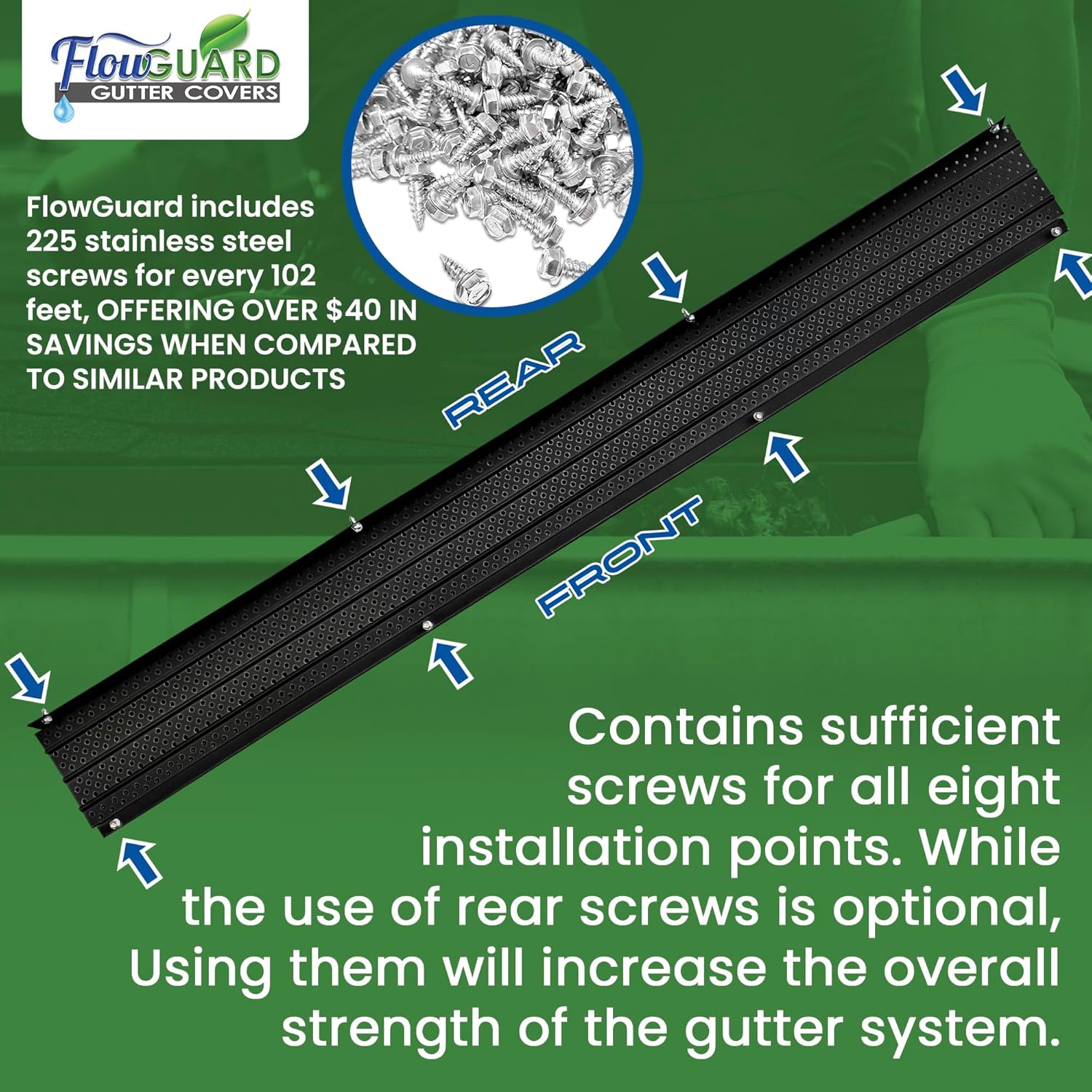
FlowGuard
$159.00
In stock on Amazon
Check price on AmazonH3: Mid-Grade Tier — Pre-Cut Panels on Standard Residential Jobs
The mid-grade tier is where most whole-house DIY and contractor installs land, and it’s where the format debate gets genuinely complicated.
By the numbers:
- Pre-cut panel, mid-grade: $1.20–$2.00 per linear foot (retail and distributor pricing)
- Waste factor, pre-cut panel on a standard house: 8–15%
- Waste factor, pre-cut panel where pieces are cut to order: near zero
On headline material cost, panels cost more per foot. But the labor profile shifts the equation on anything beyond a simple roofline. The fixed 36- or 48-inch panel length becomes a modular unit that normalizes cut time on corners, valleys, and end caps. As Bob Vila’s review coverage in “Best Gutter Guards Tested and Reviewed” notes, snap-in installation on most mid-grade panel systems is specifically engineered to reduce per-linear-foot installation time on residential jobs compared to field-cut approaches.
Three hidden costs consistently get underpriced in format comparisons at this tier:
Blade and consumable consumption. Roll-format micro-mesh stock — especially anything with a stainless steel filter layer — eats aviation snips. On a 200-foot job with heavy cutting, blade replacement and snip wear add $15–$40 in consumables that don’t show up in the material estimate. Pre-cut panels rarely require more than a single utility knife for end-of-run trims.
Joint sealing and debris bypass. Every cut in a roll-format install is a potential debris bypass point if not properly lapped and secured. Pre-cut panels, particularly snap-in designs, are engineered to lap consistently at their fixed joint points, which reduces callback risk on jobs where crews are working fast or in awkward locations.
Inventory management on multi-structure jobs. Roll stock in multiple widths creates storage and inventory complexity across job sites. Pre-cut panels in the same brand ship in width-specific SKUs that are easier to order exactly and track. Bob Vila’s contractor-focused coverage in “Best Gutter Guards Tested and Reviewed” identifies inventory management overhead as a real but underreported cost driver on multi-unit jobs.
Best for: Two-story colonials, craftsman homes, and properties with four or more gutter corners, dormers, valleys, or mixed gutter widths. The modular geometry reduces cut time, normalizes joint spacing, and simplifies inventory.
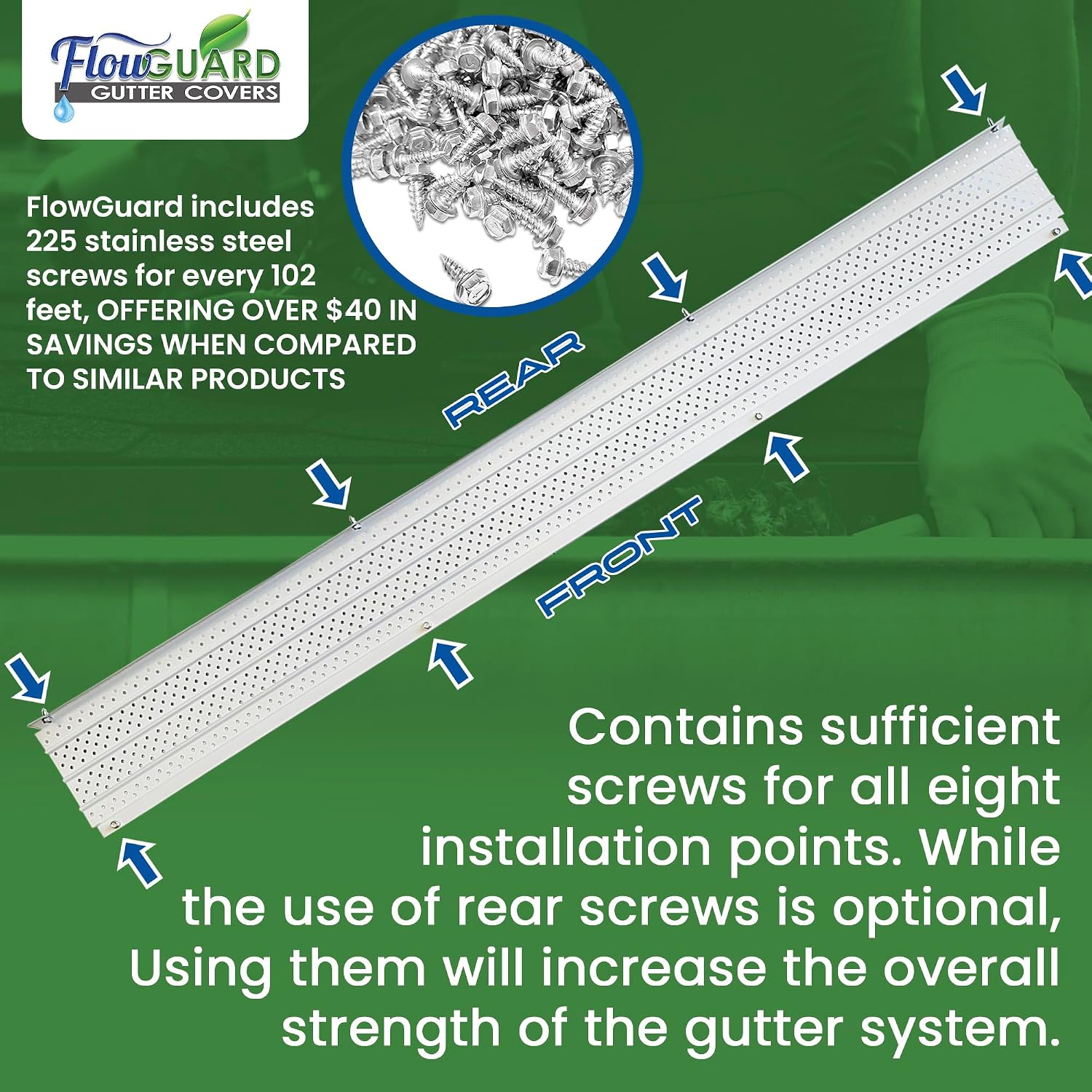
FlowGuard
$179.00
In stock on Amazon
Check price on AmazonH3: Premium Tier — Custom-Cut Installed Systems
At the premium tier, the format decision is largely made for you. Systems like LeafFilter and MasterShield use their own proprietary panel stock, custom-measured and cut at the truck by the installation crew.
By the numbers:
- Premium installed system: $17–$30 per linear foot installed
- Waste factor: 2–3% (custom-cut to order at the truck)
Per This Old House’s editorial coverage in “Best Gutter Guards of 2025,” custom-cut panels on professional installs routinely hit waste rates well below what roll-format DIY installs average on houses with moderate roofline complexity. The waste story at this tier is not a format decision — it’s baked into the service model.
At this price point, the primary decision driver is warranty terms, not format. This Old House’s coverage of whole-home gutter guard systems in “Best Gutter Guards of 2025” identifies transferable no-clog guarantees as the more meaningful differentiator at the $2,000–$10,000 installed-price tier. Angi’s installed-cost editorial notes that labor on premium systems is typically bundled into the quote, so material format doesn’t change what a client pays anyway.
Best for: Homeowners prioritizing transferable lifetime warranties, professionally installed systems with maintenance guarantees, or high-value properties where callback risk must be near zero.
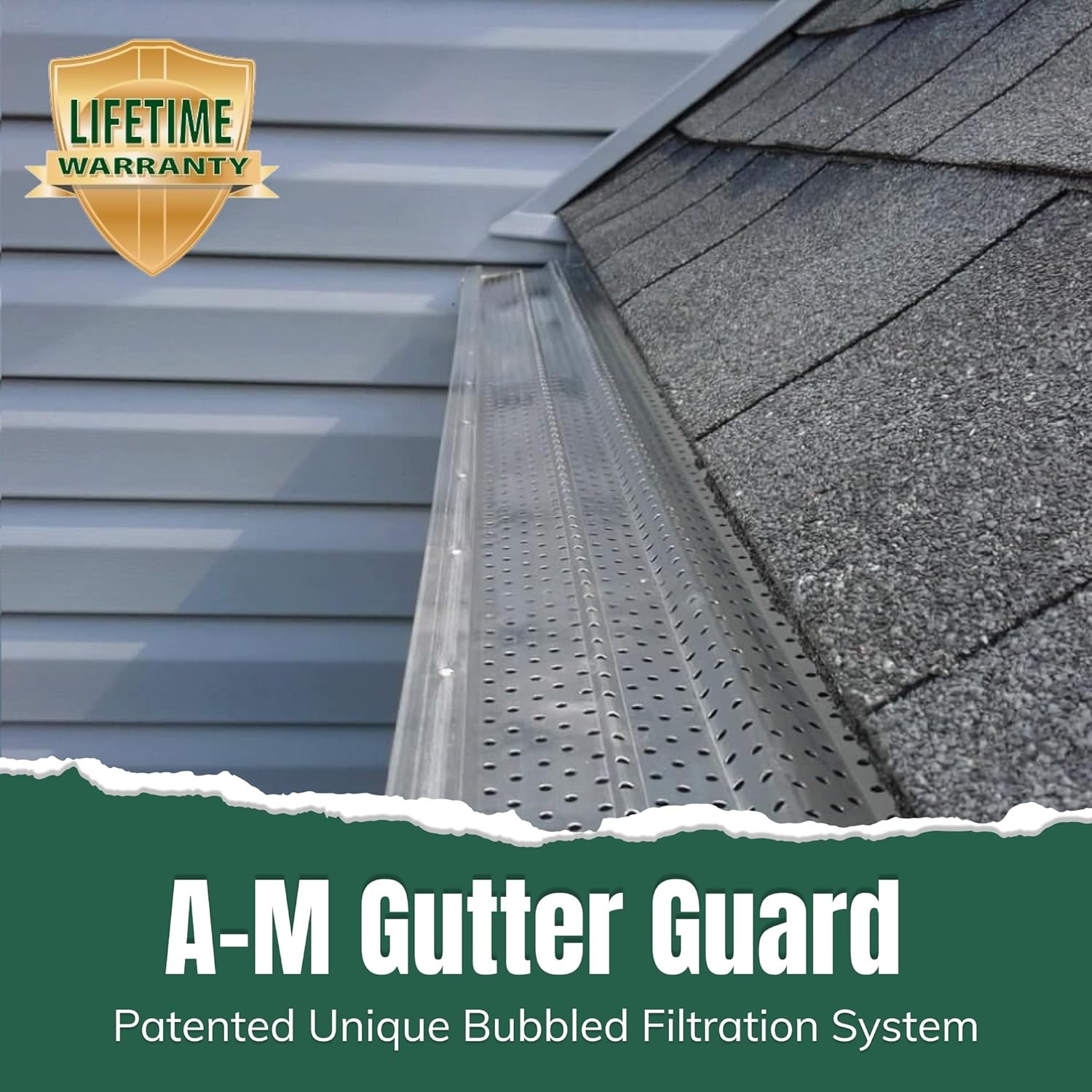
A-M
$339.99
In stock on Amazon
Check price on AmazonRoofline Complexity Score: A Quick Diagnostic
Before committing to a format, run a fast complexity read on the job. This diagnostic applies across all three tiers.
| Condition | Adds Complexity? | Roll Impact | Panel Impact |
|---|---|---|---|
| Continuous straight runs > 20 ft | No | Fast, low waste | Slower, minor waste |
| Inside/outside corners | Yes | +cut time | Predictable |
| Multiple gutter widths (4” + 5” + 6”) | Yes | Roll swap needed | SKU swap only |
| Valleys or dormers | Yes | High cut complexity | Manageable |
| Cedar shake or copper gutters | Yes | Fit issues likely | Custom or specialty |
Scoring: If you check two or more “Yes” boxes, panels are almost certainly faster and lower-waste on this job. If the job is one or two long straight runs with a consistent gutter width, roll format is likely the better margin call.
What Spec Sheets Say About Long-Run Performance
Format is a purchasing and installation variable, but it doesn’t determine product longevity on its own. That said, a few published-spec patterns are worth knowing.
Roll-format micro-mesh products from manufacturers like Gutterglove Pro and Amerimax are rated for 15–20+ years in manufacturer documentation. Pre-cut panel systems in the premium tier — including options covered by LeafFilter and MasterShield’s published warranty terms — carry transferable lifetime warranties, which is a meaningful selling point when you’re presenting a whole-home install to a client who may eventually sell the property.
Per This Old House’s editorial coverage in “Best Gutter Guards of 2025,” warranty transferability and no-clog guarantee terms are more meaningful differentiators than format alone when the installed price climbs above $2,000. Format is a job-site efficiency call. Warranty is a client relationship call. Both matter — they just matter at different stages of the decision.
The Decision Rule
Here it is, plainly.
If the job is 150+ linear feet of consistent-width K-style gutters on a simple roofline — ranch, cape, basic colonial — choose roll format. Material savings of $90–$150 on a 200-foot job are real, waste is manageable at 2–5%, and installation is fast on straight runs. Source from a distributor for better per-foot pricing than retail. This is the budget-tier play, and it works when the geometry cooperates.
If the job has roofline complexity — corners, dormers, multiple gutter widths, valleys — or if you’re running a crew across multiple units, choose pre-cut panels. The modular geometry reduces cut time, normalizes joint spacing, cuts callback risk, and simplifies inventory tracking. Your labor efficiency offsets the higher material cost, often with margin to spare. This is the mid-grade play for any house that scores two or more on the complexity diagnostic above.
If you’re specifying a premium whole-home install at the $2,000–$10,000 tier, the format decision is already made by the system you choose. Focus your energy on warranty terms, transferability, and the no-clog guarantee language rather than roll versus panel. Per Angi’s editorial research in “How Much Do Gutter Guards Cost?”, labor on premium installed systems is bundled, so material format doesn’t appear in your client’s quote as a line item anyway.
The format war between rolls and panels isn’t about which is universally better. It’s about which is better for this specific job. Run the complexity score. Show your client the waste and labor math. Make the call with data, not habit.