Your gutters are doing their job — water is moving off the roof and into the downspout. But if that downspout terminates six inches from your foundation wall, you’ve only relocated a problem, not solved it. A downspout is the vertical pipe that carries rainwater from your gutters down to ground level. A downspout extension is whatever connects to the bottom of that pipe to move water horizontally, away from the house. The goal is simple: get water at least four to six feet from your foundation before it releases into the soil. The method to get there — rigid elbow, flexible accordion, buried drain pipe, or splash block — changes entirely based on your yard’s grade, your soil type, your budget, and how much visible hardware you’re willing to accept at the base of the wall. This guide walks through every major extension type side-by-side, with the math and the tradeoffs named plainly, so you leave with a clear decision rather than another browser tab.
| EDITOR'S PICK[Sekcen 2 Pack Rubber Downspout…](https://www.amazon.com/dp/B0F8356M5S?tag=greenflower20-20) | Mid-tier[plusgutter Black-2pack Rain Gut…](https://www.amazon.com/dp/B09YQWBRDX?tag=greenflower20-20) | Budget pick[NAACOO 2 Pack Downspout Splash…](https://www.amazon.com/dp/B0BLNRT6ZJ?tag=greenflower20-20) | |
|---|---|---|---|
| Type | Splash block | Flexible extender | Splash block |
| Length | — | 21–68 in | 24 in |
| Material | Rubber | — | — |
| Included fixings | — | — | 4 fixing nails |
| Price | $39.99 | $26.39 | $20.99 |
| See on Amazon → | See on Amazon → | See on Amazon → |
Why the “Last Six Inches” of Your Gutter System Does the Most Damage
Here’s the counterintuitive truth: a beautifully specced seamless aluminum gutter system, correctly pitched and fitted with a commercial-grade leaf filter, can still dump hundreds of gallons of water directly against your footer if the extension at the bottom is wrong or missing. Fine Homebuilding, in its project guide “Grading and Drainage Around Foundations,” notes that the leading cause of basement water intrusion isn’t waterproofing failure — it’s surface water that never got redirected. The fix at the downspout level costs $15 to $300 per termination point. The fix at the foundation level costs $5,000 to $25,000.
The physics are unforgiving. A 1,500-square-foot roof section in a 1-inch rain event generates roughly 935 gallons of runoff. If that all funnels through one downspout with a missing or inadequate extension, you’re pressing nearly a thousand gallons into the soil immediately adjacent to your foundation wall in a single storm. Clay-heavy soils — common across the mid-Atlantic, upper Midwest, and Pacific Northwest — don’t absorb that load; they channel it laterally toward the path of least resistance, which is often your basement wall.
The intervention is not glamorous. But it is high-leverage.
The Four Extension Types: A Spec-by-Spec Breakdown
Each of the four main extension categories serves a different site condition. The H3 sections below each close with a tier marker that reflects the typical cost and complexity positioning of that solution.
1. Rigid Elbow-and-Pipe Extensions
What it is: One or more pre-formed aluminum or vinyl elbows — typically 45° or 75° — connected to a short horizontal pipe run that terminates above grade. This is the most common solution on new construction and remodels.
Published specs to compare:
- Aluminum: 26-gauge to 28-gauge material, matches standard K-style or half-round profiles, paintable
- Vinyl: Lighter, UV-degradable over 7–10 years in direct sun, lower initial cost
- Standard lengths: 24-inch, 36-inch, and 48-inch horizontal runs; multiple sections can be joined
The tradeoff: Rigid extensions are low-cost ($8–$25 per elbow, plus pipe sections at $6–$12 per foot) and visually cleaner than accordion styles. The limitation is that they’re fixed — if your grade changes, if landscaping is later installed, or if a lawnmower clips one, you’re reinstalling. They also terminate above grade, meaning water still releases at a single point. On flat or gently sloped yards, that’s often not far enough.
When to spec this: Use rigid aluminum when you’re matching an existing aluminum gutter system for a cohesive look, when the yard grade drops sharply within four feet of the house, or when the homeowner wants a clean, low-profile appearance. Bob Vila, in its roundup “The Best Downspout Extensions,” consistently points to rigid aluminum as the spec-sheet winner for longevity and material compatibility among surface-mounted solutions.
NAACOO
$20.99
In stock on Amazon
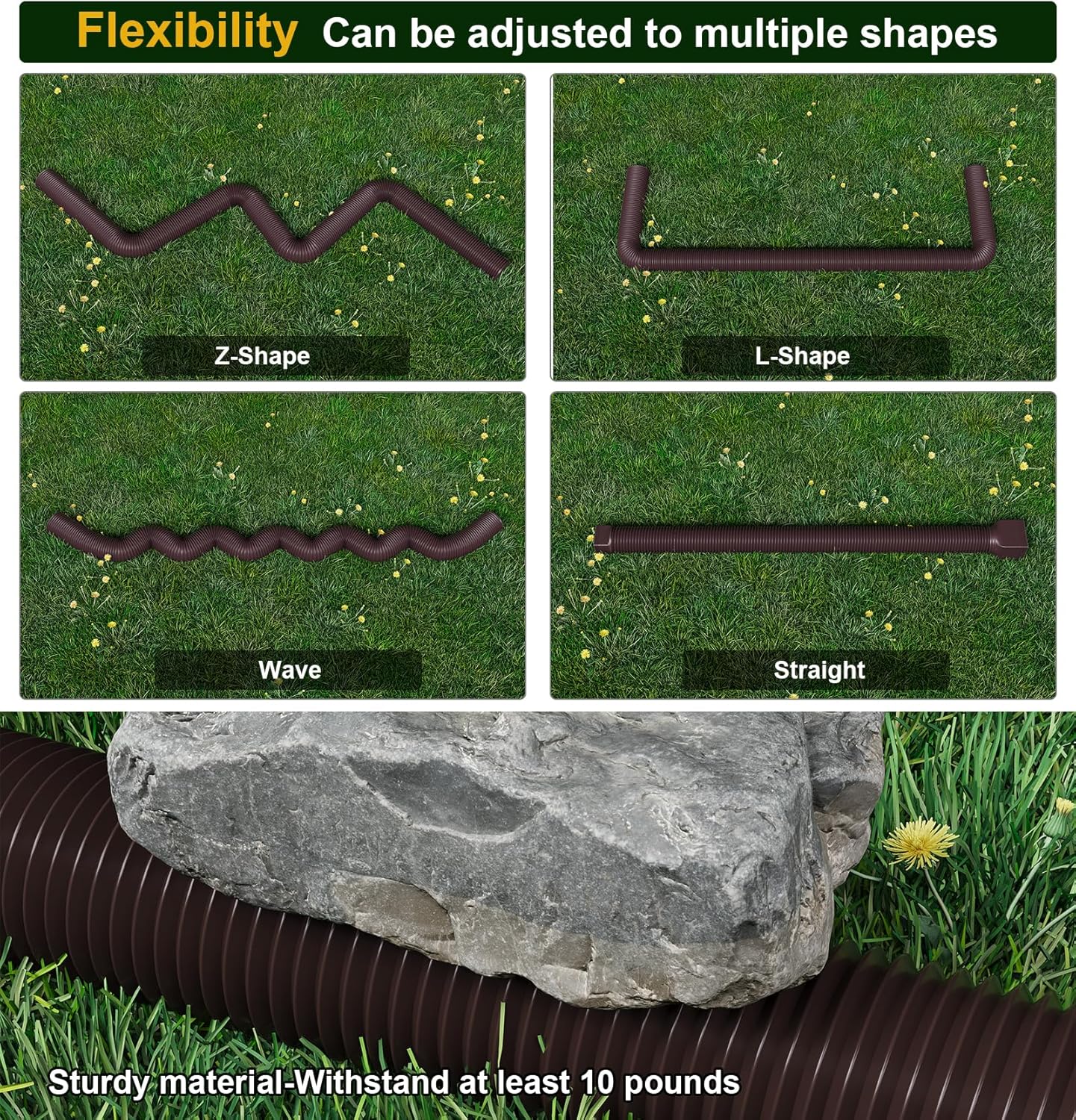
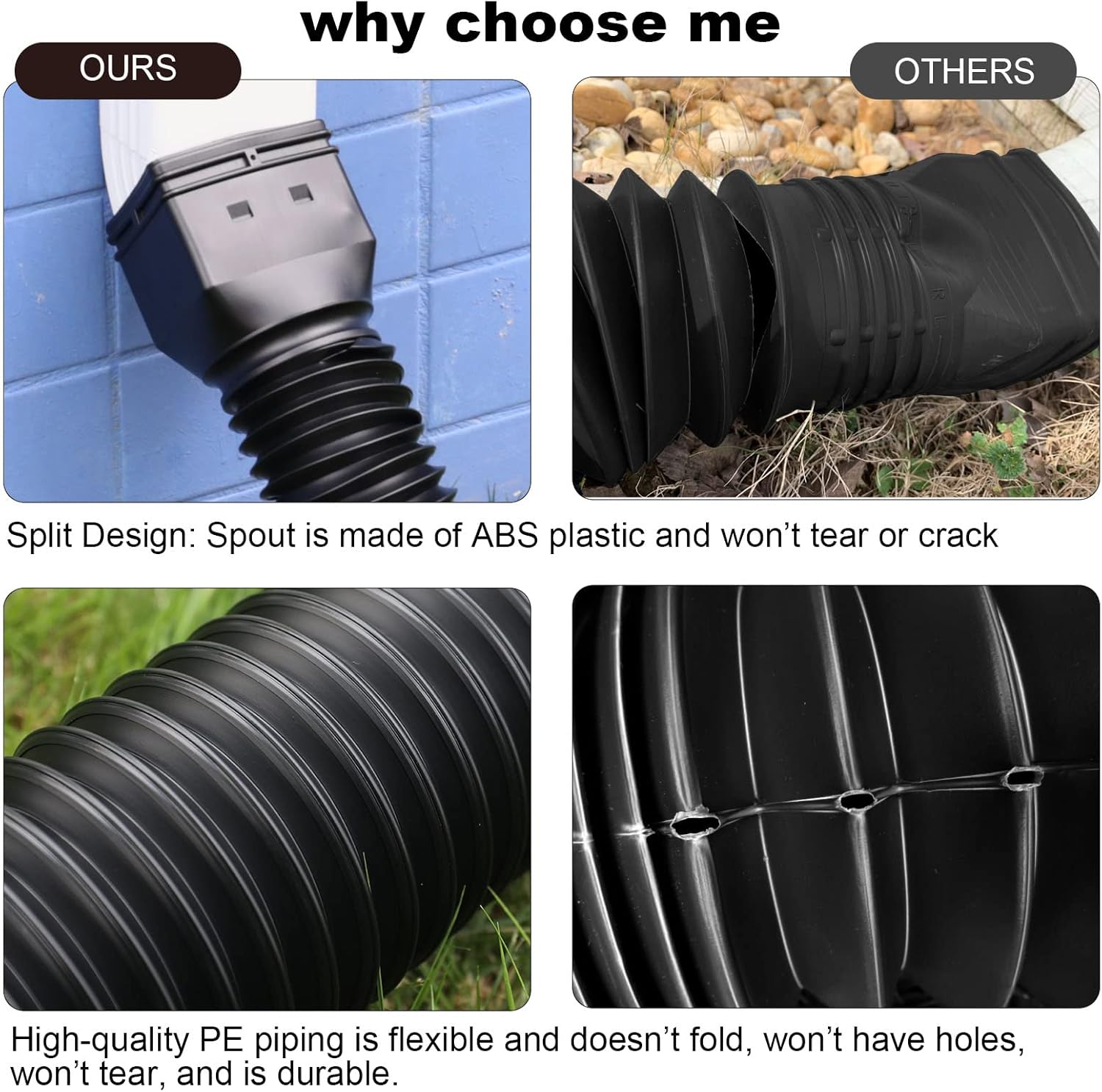
Check price on Amazon2. Flexible and Accordion Extensions
What it is: A corrugated, accordion-style sleeve — almost always vinyl — that attaches to the downspout outlet and can be bent and repositioned to direct water wherever the grade allows.
Published specs to compare:
- Material: PVC corrugated, typically 3-inch or 4-inch diameter
- Extended length: Most expand from 6–8 inches collapsed to 52–72 inches
- Pressure rating: These are gravity-flow products only; no rated pressure tolerance
The tradeoff: The accordion format is the most-installed extension in the DIY market. Family Handyman, in its project guide “Downspout Extensions and Drainage Solutions,” lists it as the default first step for homeowners tackling the problem themselves. It’s forgiving during installation and easy to reposition around landscaping obstacles. The problem is the accordion ridges. Those interior corrugations trap debris, hold standing water between storms, and in freeze-thaw climates — roughly USDA Hardiness Zones 3 through 6 — they crack within two to four seasons. Contractors and property managers consistently report that accordion extensions fail faster than any other extension type and become a recurring maintenance callback.
When to spec this: Use accordion extensions as a temporary solution while grading work is planned, or on rental properties where the lowest installed cost is the primary constraint. Do not specify them for any project where the client expects a 10-year service interval.
NAACOO
$20.99
In stock on Amazon
Check price on Amazon3. Underground Drain Pipe (Buried Extensions)
What it is: A rigid or perforated PVC pipe — typically 4-inch Schedule 20 or Schedule 35 — buried in a trench from the downspout outlet to a daylight exit point or dry well at least 10 feet from the foundation.
By the Numbers
| Spec | Buried Rigid PVC | Surface Rigid Aluminum | Accordion Vinyl |
|---|---|---|---|
| Effective drainage distance | 10–50+ ft | 2–6 ft | 2–6 ft |
| Installed cost per downspout | $150–$600 | $25–$80 | $8–$20 |
| Expected service life | 25–50 years | 20–30 years | 2–5 years |
| Freeze-thaw vulnerability | Low (below frost line) | Low | High |
| Visibility | None | Visible at grade | Visible at grade |
The tradeoff: Buried drain pipe is the highest-performing solution for drainage distance and longevity — and it’s the most expensive and labor-intensive to install. A single downspout termination routed to a daylight outlet 20 feet out will run $200–$450 in materials and two to four hours of trench work. On a whole-home project with six to eight downspouts, that’s a meaningful line item.
The exit point matters. Angi, in its cost guide “How Much Does Gutter Installation Cost?”, notes that buried systems routed to a pop-up emitter — a valve that opens under water pressure and closes when dry — outperform those routed to an open pipe end, which can become a pest entry point or clog with debris over time.
Buried systems also require attention to local drainage codes. Many municipalities regulate where surface runoff can daylight, particularly in communities with combined sewer systems. Fine Homebuilding’s foundation drainage guidance specifically flags this: always confirm with the local building department before routing buried extensions toward a street curb or storm drain connection.
When to spec this: Underground pipe is the correct specification for any high-investment property — copper gutter systems, new custom builds, historic restorations — where the extension needs to be invisible and the system needs to be maintenance-free for decades. It’s also the right call when yard grade is flat or the lot is large enough to push water well away from the structure.
Sekcen
$39.99
In stock on Amazon
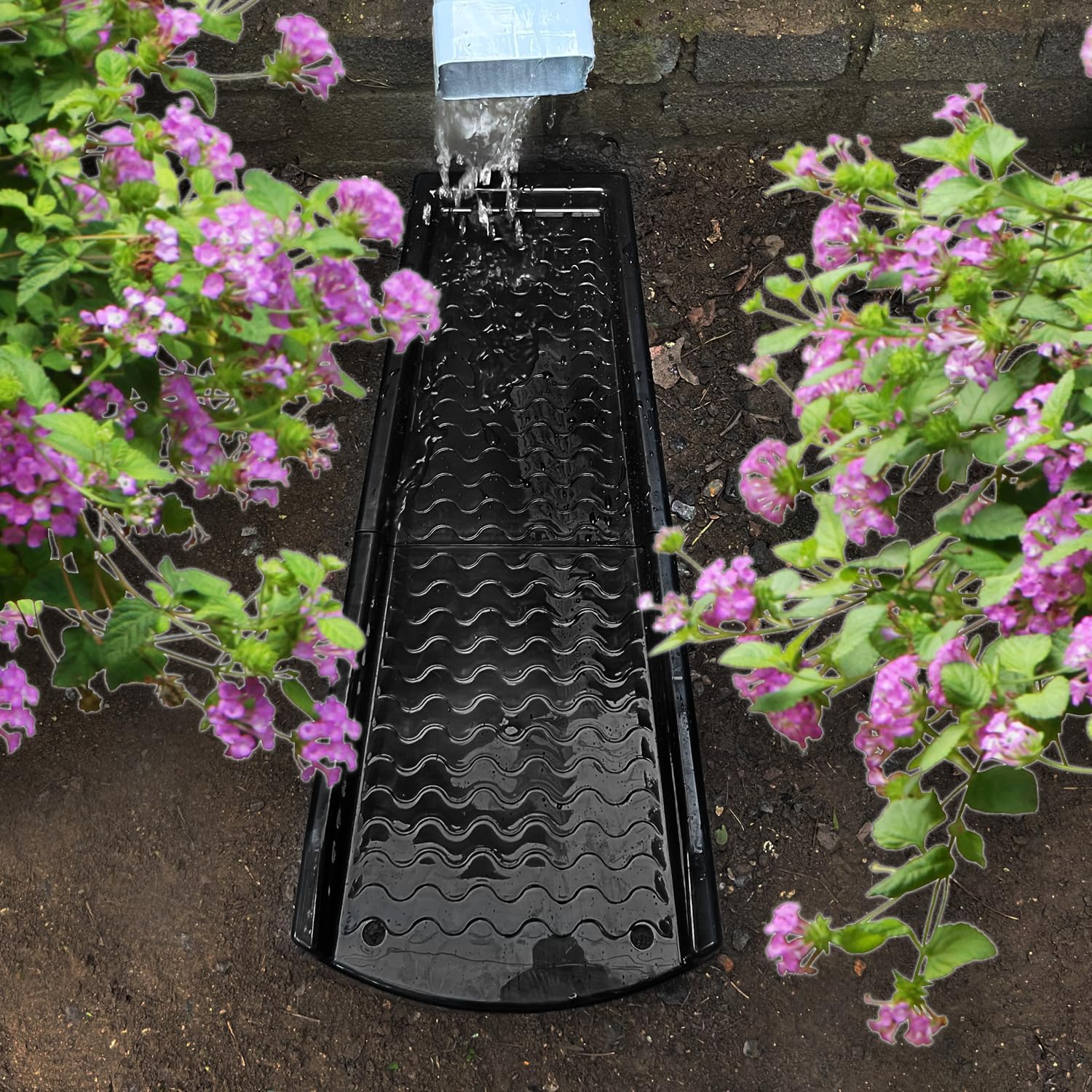
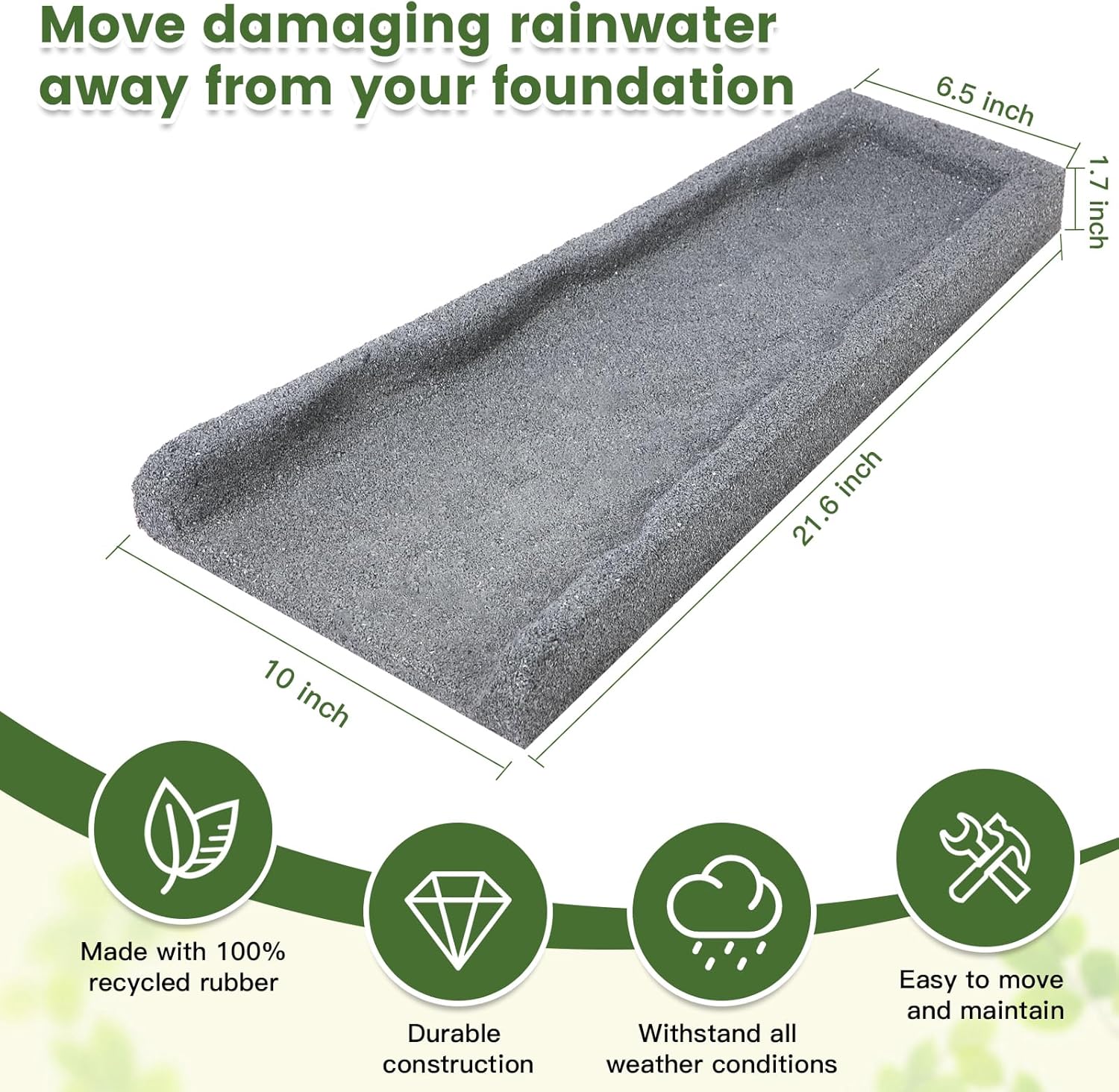
Check price on Amazon4. Splash Blocks and Surface Channels
What it is: A splash block is a sloped concrete or plastic trough placed directly under the downspout outlet to direct water away from the foundation and dissipate its velocity. Surface channels — linear drains set into hardscape — serve the same function in paved areas.
The tradeoff: Splash blocks are the oldest and most misunderstood extension method. Installed correctly — with the high end tight to the wall and the low end angled away — they work reasonably well for modest rainfall on yards with adequate positive grade. The problem is that splash blocks frequently settle, tip, or get repositioned by landscaping crews, at which point they’re channeling water toward the wall instead of away. This Old House, in its how-to coverage of downspout extensions, notes that splash blocks are best understood as a final velocity-dissipation device at the end of a longer extension run, not as a standalone drainage solution.
When to spec this: Splash blocks make sense at the terminus of a buried pipe system, protecting soil from erosion at the daylight exit, or at downspouts in areas with very steep positive grade where water needs velocity scrubbed before it runs across hardscape. They should not be the primary extension solution on any project with a flat yard or clay soil.
plusgutter
$26.39
In stock on Amazon
Check price on AmazonHow to Match Extension Type to Site Conditions
If you’re evaluating a specific project, run it through this decision frame before pulling product off the shelf.
If the yard has a clear positive slope — dropping 6 or more inches in the first 10 feet from the house: Rigid aluminum or vinyl extensions with a 4-to-6-foot run are adequate. Specify 26-gauge aluminum if the gutter system is aluminum — material matching prevents galvanic corrosion at the connection point.
If the yard is flat or has negative grade sloping toward the house: Surface extensions of any type won’t fix this. The water will pool at the terminus and migrate back. Buried pipe routed to a pop-up emitter or a dry well is the correct specification. Budget $200–$500 per downspout and plan for a mini-excavation.
If the project is a high-end exterior package — copper gutters, custom trim, architectural siding: Surface accordion extensions are off the table. Specify buried pipe to a pop-up emitter, or surface rigid copper extensions if a visible run is acceptable. Copper extensions patina to match half-round systems from manufacturers like Revere Copper or Gibraltar Building Products and become a deliberate design detail rather than an afterthought.
If the project is a multi-unit property or commercial specification: Buried pipe with pop-up emitters is the minimum. Add cleanout access points every 30–40 feet of buried run, since commercial sites accumulate debris faster and the cost of excavating a blocked pipe far exceeds the cost of a cleanout tee at installation.
If budget is the hard constraint and the yard has adequate slope: Rigid vinyl or aluminum extensions at $20–$60 per downspout will do the functional job. Skip accordion. Skip splash blocks as the sole solution.
The One Number Most Contractors Underquote
Most residential building codes — including those derived from the International Building Code — recommend a minimum of 6 inches of positive grade in the first 10 feet from the foundation. Most downspout extensions terminate well before that 10-foot mark. Owners consistently report that extensions which look adequate during dry conditions reveal their shortcomings during back-to-back storm events, when soil near the terminus becomes saturated and water begins ponding within two feet of the wall. The fix is almost always extending the run — either adding a pipe section to a surface extension or adding length to a buried run. Building that extra footage into the original specification is cheaper than the callback.
The Bottom Line
Downspout extensions are the unglamorous final chapter of a gutter specification — but they’re where the drainage system either succeeds or fails at the thing that matters most: keeping water away from the structure. The right product depends entirely on site conditions, not on which option is cheapest at the supply house.
Rigid aluminum works for sloped yards. Buried pipe solves flat ones. Nothing accordion-style belongs on any project expected to last a decade. Match the extension material to the gutter material on architectural projects, confirm local drainage ordinances before burying anything, and don’t let a $20 decision undermine a $3,000 gutter installation.