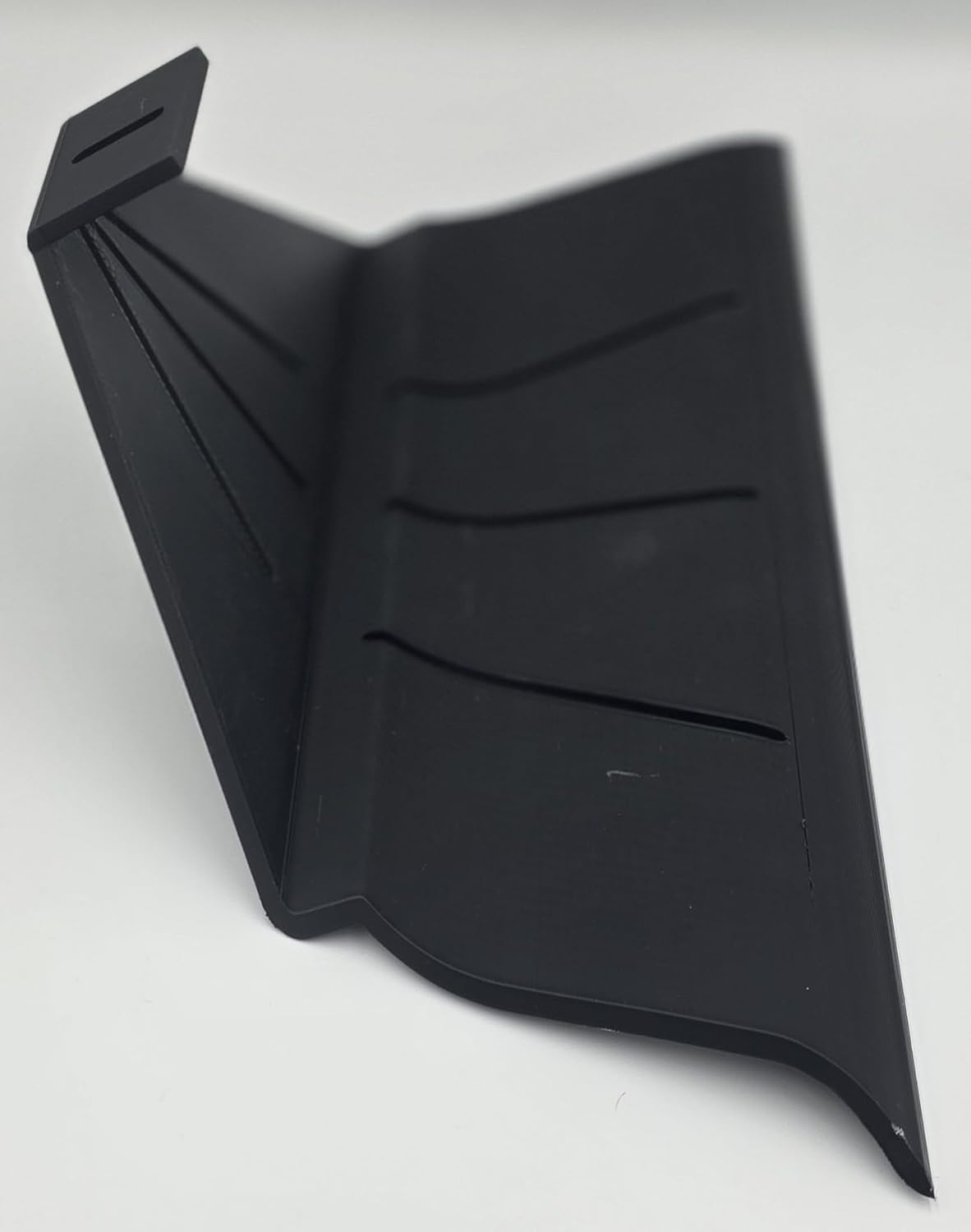
Every gutter run has one job: move water from your roofline to a downspout before it decides to go somewhere worse — behind your fascia board, into your soffit, or down your foundation wall. The mechanism that makes that happen is pitch, sometimes called slope — the gentle downward angle along the length of the gutter that keeps water flowing rather than pooling. Get the pitch right and a well-hung gutter is nearly maintenance-free in the short term. Get it wrong and you end up with standing water, rust staining, overflow at the low spots, and eventually, a rotted fascia that costs far more to fix than the gutter itself. This article walks through the exact math behind proper slope, the tools professionals use to establish and verify it, and the role of wedge shims — small tapered inserts that let you correct a sloped or bowed fascia without re-cutting a single hanger.
If you have a run under contract or are spec’ing a job right now, you’ll find actionable decision rules at each section. The math is simple. The tradeoffs are real. Let’s get into it.
| EDITOR'S PICK[5 Inch Hidden Gutter Hangers fo…](https://www.amazon.com/dp/B0CRHDXM35?tag=greenflower20-20) | Mid-tier6 Inch Hidden Gutter Hangers fo… | Budget pickGutter Wedges for 6" K-Style Gu… | |
|---|---|---|---|
| Type | Hanger bracket | Hanger bracket | Wedge/spacer |
| Size | 5 inch | 6 inch | 6 inch |
| Pack Qty | 100 | 25 | 10 |
| Price | $59.99 | $36.99 | $25.99 |
| See on Amazon → | See on Amazon → | See on Amazon → |
The Drainage Math: How Much Slope Is Actually Correct?
The widely cited standard — referenced in This Old House’s gutter installation guide and repeated by Family Handyman’s DIY gutter installation walkthrough — is ¼ inch of drop per 10 linear feet of gutter run. That’s it. A 40-foot run from a high point at the corner to a downspout at the opposite end needs a 1-inch total elevation change. A 60-foot run needs 1.5 inches.
By the numbers:
| Run length | Required drop (¼”/10 ft) | At ½”/10 ft (steeper) |
|---|---|---|
| 20 ft | ½ inch | 1 inch |
| 40 ft | 1 inch | 2 inches |
| 60 ft | 1½ inches | 3 inches |
| 80 ft | 2 inches | 4 inches |
The ¼”/10 ft figure is a minimum, not a target. Bob Vila’s slope guidance notes that in high-rainfall regions or on roofs with steep pitches that accelerate runoff, bumping to ½ inch per 10 feet improves drainage velocity without creating the visual problem of a visibly tilted gutter. Beyond ½ inch per 10 feet, you start creating a different issue: the back of the gutter at the high end may drop below the drip edge of the roof, letting water bypass the gutter entirely. That’s the ceiling. So the workable range is ¼” to ½” per 10 linear feet, with the specific choice depending on rainfall load and aesthetics.
The hidden variable: fascia slope. Most residential fascia boards aren’t perfectly level — they follow the rake of the roof framing. On a standard gable home with a 4:12 to 6:12 roof pitch, the fascia itself already leans back slightly. When you hang a gutter flat against a leaning fascia, the gutter’s inside face tilts toward the house, which redirects overflow toward the soffit rather than outward. This is why shimming isn’t an edge case — it’s a standard part of a clean install on most existing homes.
Alignment Tools: What’s Actually Worth Carrying on a Job
Establishing a consistent ¼” drop across a 40- or 60-foot run sounds straightforward on paper. In practice, you’re working at ladder height, dealing with a fascia that may be warped, and trying to hold a chalk line taut while a second person marks hanger locations. Here’s how experienced installers approach the toolkit, and what the tradeoffs look like.
Laser Levels
A rotary or line laser level is the fastest and most repeatable way to establish a reference line across the full run. You set the laser at one end of the fascia, establish your high-point mark, and let the beam show you exactly where the low point should land. From there, chalk line or pencil marks for each hanger location can be offset from the laser line by a calculated amount.
Published specs for construction-grade line lasers (Bosch, DeWalt, and Spectra Precision are commonly referenced in the trade) put working range at 30–100 feet indoors; outdoors in bright daylight, most self-leveling models require a laser detector for reliable readings beyond 30 feet. For a 40-foot residential run in daylight, you’re at the edge of reliable naked-eye detection — budget for a detector or plan around morning/evening light.
Fine Homebuilding’s editorial coverage of gutter installation has consistently noted that laser levels pay for themselves on multi-structure jobs and whole-home installs where you’re hanging 200+ linear feet of gutter across multiple elevations. For a single-run DIY install, the case is thinner.
String Lines and Torpedo Levels
The traditional method — and still entirely valid — is a taut string line stretched between two nails at pre-calculated heights. You drive a nail at your high-point mark at one end, drop the string by your calculated total (e.g., 1 inch for a 40-foot run), and drive the second nail at that lower mark. The string gives you a continuous reference for every hanger position along the run.
A torpedo level (the short, pocket-sized level) is used to check individual hanger positions once hung, not to establish the overall reference — it’s too short to catch cumulative error across a long run. If you’re using only a torpedo level for slope verification, you’re checking local flatness, not global pitch.
Digital Pitch Gauges and Inclinometers
A digital inclinometer or pitch gauge clipped to the face of an installed gutter section can read slope in degrees or inches-per-foot directly. For installers who regularly work with half-round profiles — where the inside face of the gutter provides a clean reading surface — a digital inclinometer speeds up verification considerably. Published accuracy specs for mid-range models typically land at ±0.1 degrees, which translates to roughly ±0.07 inches per 10 feet — well within the tolerance needed for gutter work.
If X, then Y — tool selection:
- Single run, budget-conscious install: String line + two nails + tape measure. Total cost under $5. Reliable if your fascia is reasonably straight.
- Multi-run job or bowed fascia: Add a line laser. The time savings on layout across 3–4 elevations more than offsets the tool cost.
- Copper or architectural-grade install where visual precision matters as much as function: Digital inclinometer for verification after every third hanger. Copper is unforgiving of minor sags because the patina will highlight any pooling.
Wedge Shims: The Underrated Correction Tool
A wedge shim is a tapered insert — usually aluminum, vinyl, or composite — placed between the back of the gutter hanger and the fascia board to correct for fascia lean or localized bow. Instead of bending a hanger to compensate (which creates stress concentration and a potential failure point), a correctly selected shim fills the gap cleanly and transfers load back to the fascia evenly.
When Do You Actually Need Shims?
The rule of thumb that circulates among experienced gutter contractors: if the fascia leans back more than 3 degrees from vertical, shimming is no longer optional — it’s the difference between a gutter that throws water outward during heavy rain and one that channels it toward the soffit. On homes with roof pitches of 8:12 or steeper, fascia lean can easily exceed 5–7 degrees.
Check fascia lean with a torpedo level held flat against the fascia face. Anything beyond plumb (perfect vertical) tells you the fascia is tilting. Multiply the degree of lean by the depth of the gutter hanger to estimate how much gap you’re dealing with at the back of the hanger.
Shim Materials and Fit
Aluminum wedge shims are the standard for aluminum and copper gutter systems. They won’t compress over time the way vinyl can under thermal cycling, and they won’t introduce a galvanic corrosion risk if you’re working with aluminum hangers against an aluminum fascia. For copper systems, copper or stainless-steel shims are the correct spec — mixing metals accelerates corrosion at contact points, and on a $3,000+ copper installation, that’s an expensive shortcut.
Composite or vinyl shims are common in lower-cost vinyl K-style installations where the load is lighter and thermal expansion of the shim is less of a concern. They’re faster to cut to length with a utility knife and are widely available at big-box retailers.
Sizing: most residential shims come in standard taper angles (typically 1°, 2°, and 5°) and need to be matched to your measured fascia lean. Stacking shims to hit an intermediate angle is acceptable, but use construction adhesive between layers to prevent migration over time — an Angi cost guide note on gutter callbacks specifically flags shim migration as a recurring cause of re-hang charges on older installs.
The Installation Sequence That Prevents Errors
The sequence matters more than installers who are new to shimming typically expect:
- Establish your slope reference line first (string or laser) before touching a single hanger.
- Test fascia lean at three points along the run: both ends and the midpoint. If lean varies significantly (common on older homes with framing movement), you may need different shim angles at different points.
- Pre-fit shims dry — no adhesive — and hang the first and last hanger to verify the gutter sits at your reference line with the front lip slightly below the drip edge (standard clearance: ½ inch below the roof’s drip edge, per This Old House’s installation guide).
- Walk the run with a torpedo level on the gutter face to verify that the slope is continuous — no flat spots or reverse-pitch zones between hangers.
- Then set hangers permanently with shims adhered or mechanically fastened.
Skipping step 4 is the most common single source of standing water complaints on installs that otherwise look correct from the ground.
Bringing It Together: Decision Rules for Your Current Job
If you’re mid-install or spec’ing now, here’s the decision frame:
- Fascia lean ≤ 2°, run ≤ 40 ft, no copper: String line + torpedo level verification is sufficient. No shims needed. Budget time for layout, not tools.
- Fascia lean 3–7°, any material: Aluminum or composite wedge shims at every hanger. Pre-fit dry before committing. Add 15–20 minutes per 20 linear feet to your labor estimate.
- Copper or architectural half-round on steeply pitched roof: Digital inclinometer, copper-compatible shims, and a line laser for layout. The material cost on these jobs makes a callback for re-hang catastrophic — build verification time into the bid.
- Run length over 60 ft: Consider a double-pitch layout with a high point at each end and a single center downspout. This cuts maximum slope correction in half and reduces the visual “tilt” that’s noticeable on long single-pitch runs across a wide facade.
The slope math is not complicated. The tools are not expensive relative to a callback. The shim is not optional when your fascia demands it. The installs that generate warranty disputes and re-hang charges almost always trace back to a layout step that was eyeballed rather than measured — not to a product failure. Get the reference line right before the first hanger goes in, and everything downstream is just confirmation.