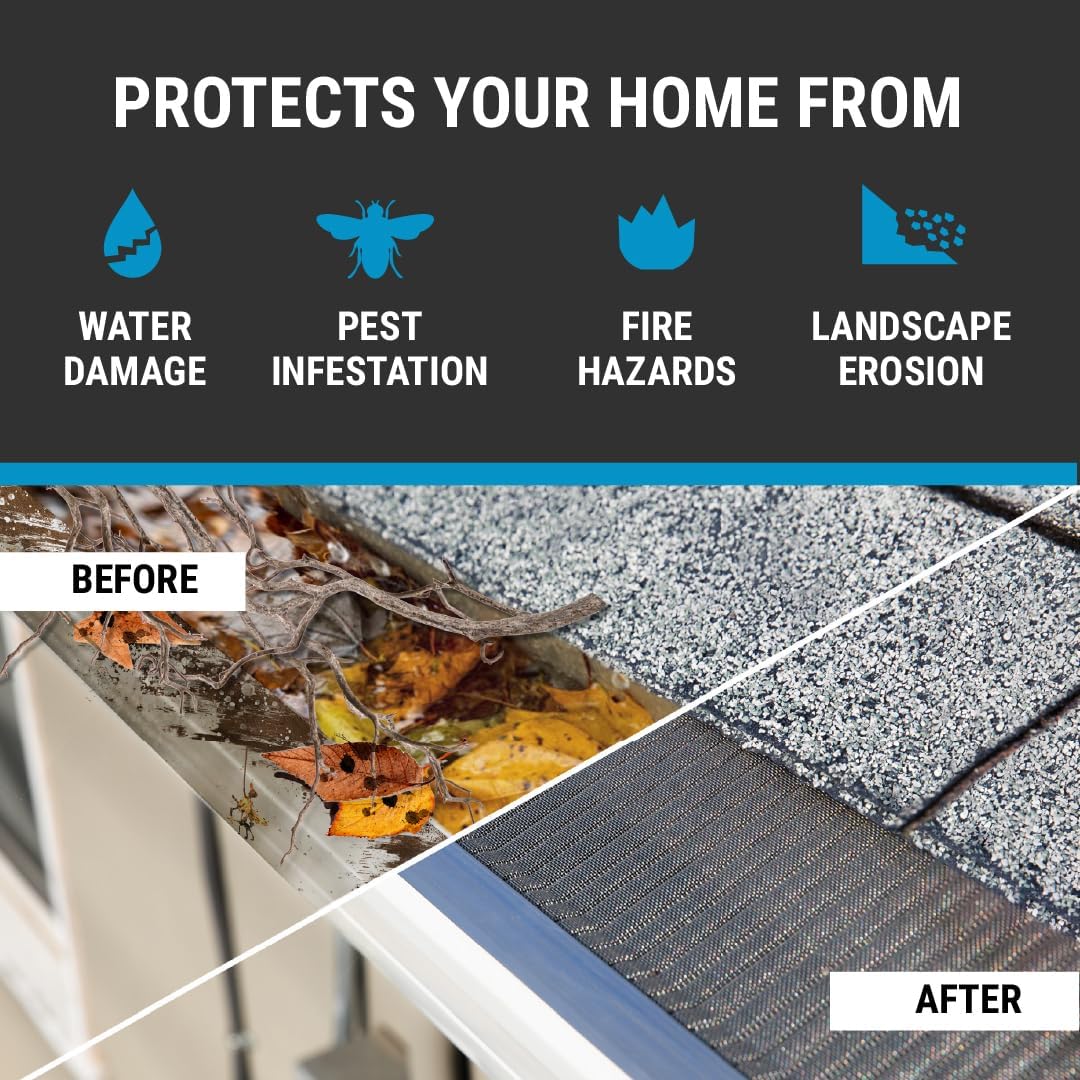
You’ve probably already concluded that micro-mesh is the right category of gutter guard — the kind with a finely perforated screen that lets water in while blocking leaves, pine needles, and even the fine shingle grit that clogs most lesser screens. Good call. Within that category, though, there’s a split that trips up even experienced remodelers: the mesh itself is made from one of two materials — stainless steel or aluminum — and that single variable cascades into meaningful differences in long-term performance, corrosion resistance, and — critically — what the warranty actually covers when things go sideways three years post-install. This article walks you through that comparison tier by tier, shows you the numbers that matter, and ends with a clear decision rule so you can stop second-guessing and close out your spec sheet.
| EDITOR'S PICK[LeafTEK Heavy-Duty Aluminum Gut…](https://www.amazon.com/dp/B07FB4QBGQ?tag=greenflower20-20) | Mid-tierFlowGuard Gutter Guard | Budget pick[Superior Gutter Guards | NEW Ra…](https://www.amazon.com/dp/B09FM6JSQ4?tag=greenflower20-20) | |
|---|---|---|---|
| Mesh material | Aluminum | Aluminum | Stainless Steel |
| Length | 200 ft | 102 ft | 48 ft |
| Made in USA | ✓ | ✓ | — |
| Hardware included | ✓ | — | — |
| Warranty | — | 50-Year | — |
| Price | $318.48 | $159.00 | $124.99 |
| See on Amazon → | See on Amazon → | See on Amazon → |
Why Mesh Material Is the Real Differentiator (Not the Frame)
Most marketing copy leads with frame material — aluminum, vinyl, stainless — because it’s the part you can see from the ground. But the mesh is where micro-mesh guards live or die, and it’s where the material science genuinely splits the field.
Stainless steel mesh is typically woven from 304-grade or 316-grade stainless wire, with individual openings in the 50–150 micron range depending on the product tier. The woven structure creates a slight surface texture that encourages water to adhere and flow through rather than sheet off — a property that matters most in heavy-downpour conditions. Manufacturer-published spec sheets from Gutterglove Pro and MasterShield place their surgical-grade stainless variants in the 50–80 micron range. The tradeoff: stainless mesh is heavier, more expensive to produce, and — depending on frame design — can add measurable weight to a long gutter run.
Aluminum mesh (sometimes called expanded aluminum or aluminum screen) is stamped or expanded rather than woven, which means the openings are less uniform and generally larger — typically in the 500–800 micron range, though some products close the gap with tighter stamping dies. Aluminum mesh is lighter and dramatically cheaper to manufacture. It handles light debris loads well. Where it underperforms relative to stainless: fine debris (decomposed leaf matter, pollen, shingle granules), long-term corrosion resistance in salt-air or industrial environments, and structural integrity at the mesh level after 8–12 years of thermal cycling.
Fine Homebuilding’s editorial coverage of exterior moisture management notes that mesh pore size is the primary determinant of whether fine organic debris becomes a maintenance problem in year two or year eight — not brand name, not installer technique. That’s worth keeping front of mind when a sales rep emphasizes frame aesthetics over mesh specification.
Three-Tier Comparison: Budget, Mid-Range, and Premium Micro-Mesh
Understanding where a specific product sits in the market hierarchy helps you match the right system to the right installation scenario. The three tiers below map to real purchasing decisions, not abstract categories.
Budget-Tier Aluminum Mesh Guards
Budget micro-mesh guards use expanded or stamped aluminum mesh — typically with pore openings in the 500–800 micron range — mounted in a lightweight aluminum or vinyl frame. Installed cost for a whole-home project generally runs in the $800–$1,800 range based on cost data published by Angi. These products handle moderate leaf loads adequately and are widely available through big-box retailers and regional gutter supply chains.
The limitation is straightforward: pore sizes in this range pass fine debris, including shingle granules and decomposed organic matter, into the gutter channel. Expect to flush gutters at least every two to three years even with a guard in place. Product warranties in this tier are typically 5–10 years, often pro-rated, and almost universally limited to manufacturing defects rather than performance outcomes. Bob Vila’s tested-and-reviewed roundup of gutter guard systems on bobvila.com identifies this defect-only limitation as a consistent pattern across budget-tier products — the warranty is technically valid but offers no remedy when the guard passes debris it was purchased to block.
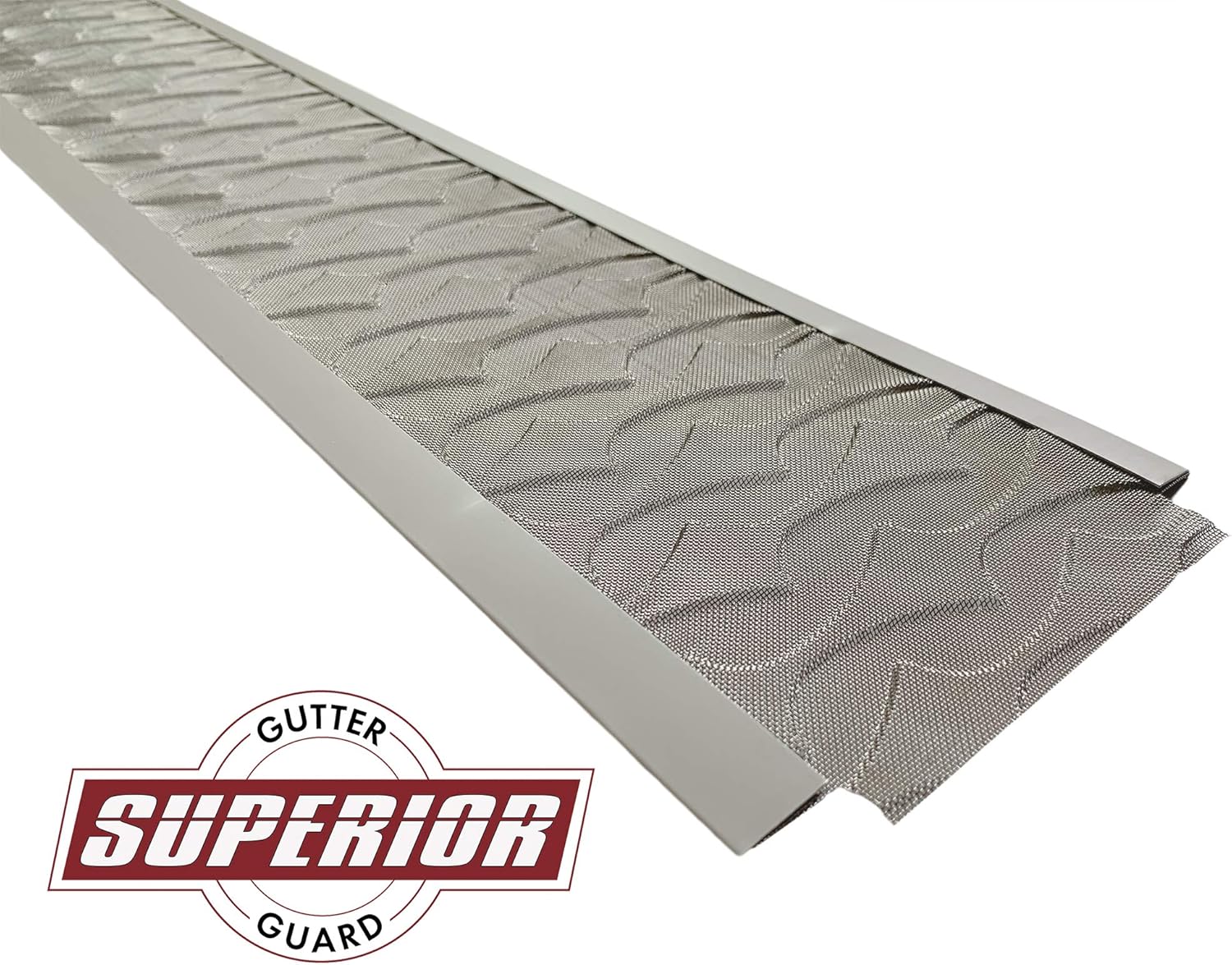
Superior
$124.99
In stock on Amazon
Check price on AmazonMid-Tier Aluminum Mesh with Enhanced Frame Construction
Mid-range micro-mesh guards typically combine aluminum mesh (sometimes with a tighter stamp pattern, bringing effective pore size closer to 300–500 microns) with a heavier-gauge aluminum frame and improved mounting hardware. Installed cost ranges from approximately $1,200–$3,500 for a standard residential project, per Angi’s cost guidance.
This tier represents the most common purchase decision for residential K-style gutter systems on conventional suburban homes. The frame quality is meaningfully better than budget options — less prone to warping across temperature cycles — but the mesh material is still aluminum, which means the corrosion and fine-debris limitations described above remain in play over the full ownership horizon. Warranties in this range extend to 10–15 years, with some manufacturers offering non-pro-rated coverage through year 10. The This Old House editorial team’s gutter guard roundup on thisoldhouse.com notes that mid-tier guards from established brands typically offer the best value-per-year-of-service calculation for homeowners without copper gutters or extreme debris environments.
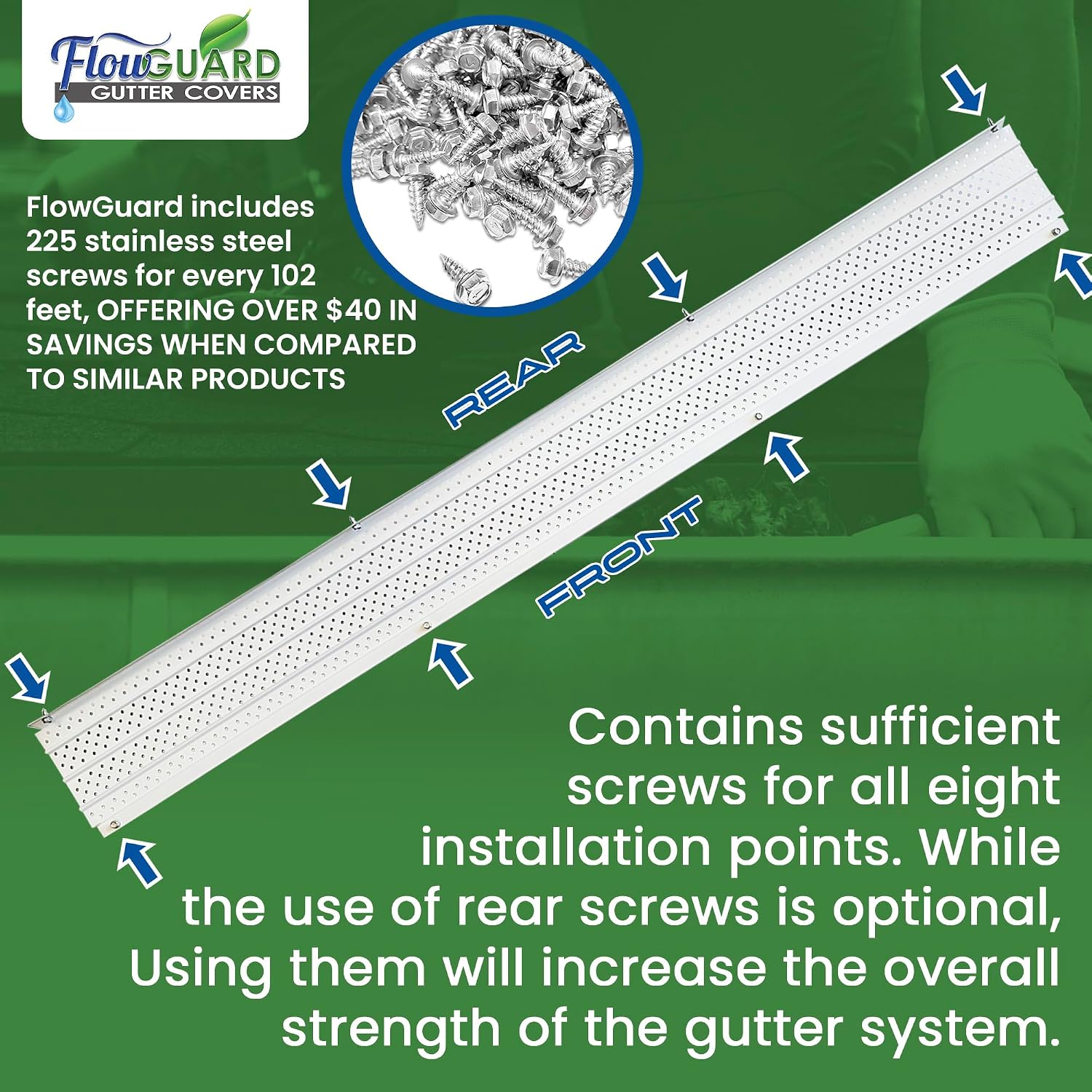
FlowGuard
$159.00
In stock on Amazon
Check price on AmazonPremium-Tier Stainless Steel Mesh Guards
Premium micro-mesh guards use woven 304- or 316-grade stainless steel mesh with pore openings in the 50–150 micron range, mounted in heavy-gauge aluminum or stainless frames. Gutterglove Pro and MasterShield are the most commonly specified products in this tier among professional installers. Installed cost for a whole-home project runs from approximately $1,800–$10,000+, depending on home size, gutter linear footage, roof pitch complexity, and regional labor rates — a range confirmed by Angi’s cost analysis.
The Consumer Reports approach to evaluating home exterior products consistently emphasizes cost-per-year-of-expected-service as a more meaningful metric than installed price. At a 20–25 year published service life versus 10–15 years for aluminum mesh alternatives, the premium-tier math often narrows considerably — and can reverse entirely when you price in a mid-life reinstall of the lower-cost system, including labor.
Warranties at this tier are the strongest in the category: most premium stainless-mesh products carry non-pro-rated lifetime or 25-year coverage that includes both product defect and — in some cases — no-clog service remedies. MasterShield’s adjustable-pitch frame design addresses steep-slope installations specifically, a variable that frequently voids warranties on fixed-pitch competitors when installed on roofs above 8:12 pitch.
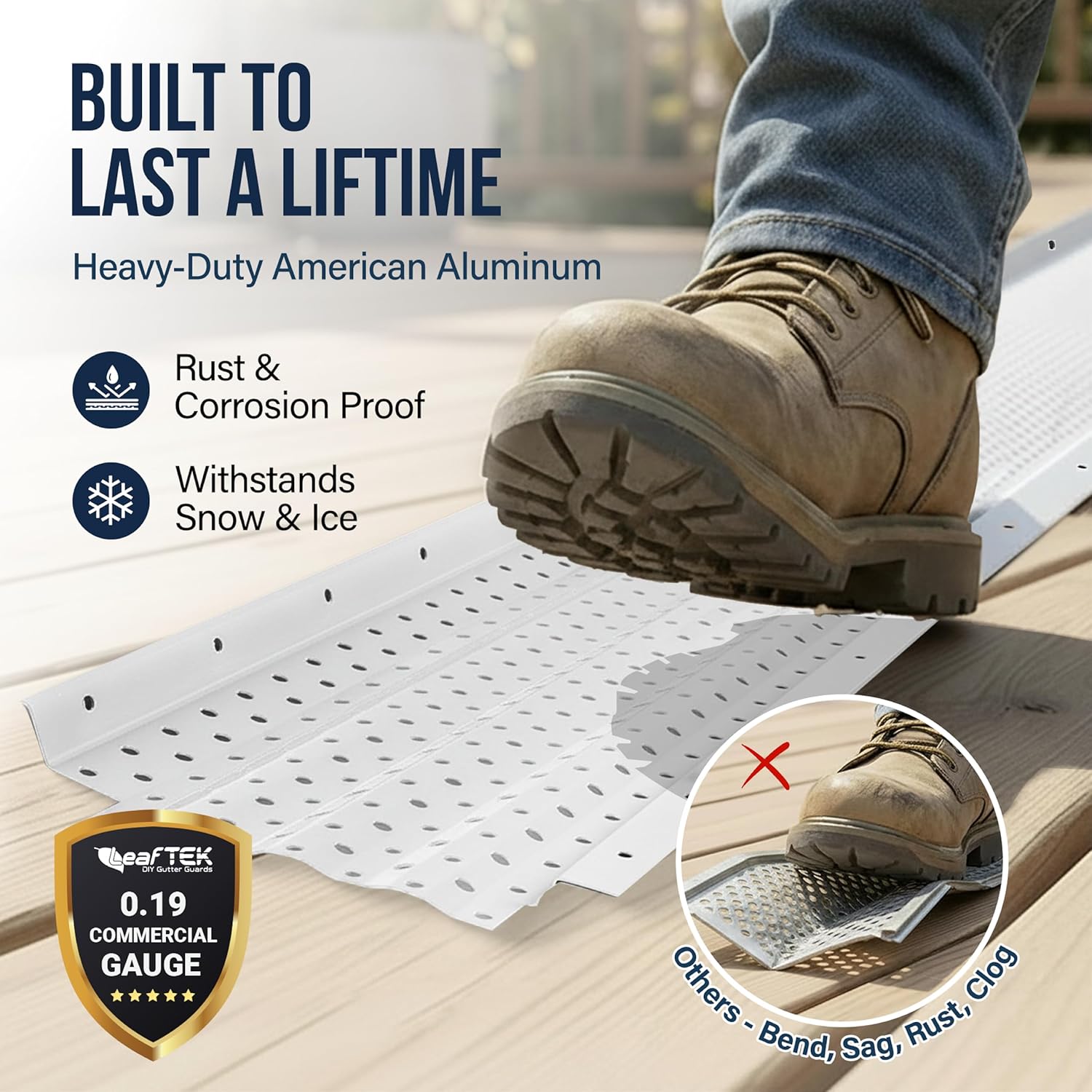
LeafTEK
$318.48
In stock on Amazon
Check price on AmazonReading the Warranty Fine Print: Where Deals Quietly Fall Apart
This is the section most buyers skip, and it’s where the most money is quietly lost. Gutter guard warranties come in two flavors: product warranties (covering defects in the guard itself) and no-clog warranties (promising your gutters won’t clog, with some form of service remedy if they do). The fine print in each is substantially different.
Product Warranties: What “Lifetime” Actually Means
Several premium micro-mesh brands advertise “lifetime” or “transferable lifetime” warranties. Before that language impresses you, locate these three clauses in the actual warranty document:
1. Definition of “defect.” Most product warranties cover manufacturing defects — mesh separation from the frame, delamination, cracking. They do not cover “performance degradation,” which is the polite term for mesh that has technically survived but now lets debris through because the pore geometry has shifted from thermal cycling or UV exposure. Bob Vila’s editorial review of major gutter guard brands on bobvila.com flags this distinction explicitly, noting that several warranties are technically valid but practically unenforceable by the time the product needs replacement.
2. Pro-rated vs. non-pro-rated coverage. A lifetime warranty that is pro-rated after year 10 means you’re paying an increasing share of replacement cost with each passing year. A non-pro-rated warranty holds full value through the coverage term. Verify pro-ration schedules in the manufacturer’s published warranty document before purchase — and confirm the version you’re reading is current, not an archived edition.
3. Installer-voiding clauses. Several manufacturers require installation by a certified dealer network and will void the warranty if the product was installed by an unlicensed or non-certified contractor — even if the installation is technically correct. If you’re a contractor specifying these systems for a client and you’re not in the manufacturer’s dealer network, that warranty may not transfer to the homeowner in the way either of you expects. Get this confirmed in writing before the contract is signed.
No-Clog Warranties: The Service Remedy Trap
Some widely installed micro-mesh systems advertise lifetime transferable no-clog warranties. What that typically means operationally is that the company will return to clean the gutters if they clog — not replace the guards. This is a service remedy, not a product replacement remedy, and the distinction matters enormously when you’re 12 years into a 25-year ownership horizon and the product configuration is no longer manufactured identically.
The pattern across installer reviews cited in This Old House’s coverage of gutter guard systems on thisoldhouse.com is consistent: no-clog warranties are most valuable when the company offering them has been in business long enough to still be operating when you call. Verify the company’s business track record and whether the warranty is backed by a third-party insurer rather than purely by the company’s ongoing solvency.
For copper gutter installations — Revere Copper systems on craftsman or historic exteriors, for example — the warranty question carries an additional layer. Copper gutters are typically incompatible with aluminum-frame micro-mesh systems due to galvanic corrosion risk, which is the electrochemical reaction that occurs when dissimilar metals in contact with moisture corrode each other. Stainless steel mesh in a stainless or copper-compatible frame is the correct specification in this context. Any warranty on a micro-mesh guard installed in contact with a copper gutter system should be reviewed for language that excludes “damage from dissimilar metal contact.”
Installation Variables That Affect Performance — and Warranty Validity
Even a correctly specified stainless mesh guard will underperform if installed incorrectly. Two failure modes dominate the long-term claim record:
Over-fascia vs. under-shingle installation. Most micro-mesh products are designed to slip under the first course of roof shingles, which allows water to flow naturally onto the mesh surface. Installers who instead fasten the guard to the fascia board only — often because the shingle-engagement approach is more time-consuming — change the water-flow geometry and create a debris-accumulation zone at the roofline edge. Fine Homebuilding’s coverage of gutter installation best practices identifies this shortcut as one of the more common triggers for warranty disputes. Some manufacturers void coverage explicitly if the product is not installed per the shingle-engagement detail in the spec sheet.
Slope and pitch matching. Micro-mesh guards rely on surface tension — the adhesion of water molecules — to pull water through the mesh while debris floats over the edge. That physics breaks down if the guard is installed at an angle steeper than the manufacturer’s rated pitch range. On steep-slope roofs (8:12 pitch and above), confirm the product is rated for your roof geometry before purchase. Gutterglove Pro’s published installation specifications include pitch compatibility ranges; MasterShield uses an adjustable-pitch frame design specifically to address this variable.
The Decision Rule: If X, Then Y
If the installation is on copper gutters, a historic home, or any property where galvanic compatibility is a factor → specify stainless steel mesh with a stainless or copper-compatible frame, full stop. Aluminum mesh on copper gutters is a warranty void and a corrosion problem waiting to happen.
If the installation is a multi-structure commercial or property-management job where labor costs dominate the lifecycle math → price out stainless mesh with a non-pro-rated, no-clog warranty from a manufacturer with at least 15 years of documented operating history. Angi’s cost data puts the installed premium for stainless over aluminum at roughly $3–$5 per linear foot in most U.S. markets. On a 500-linear-foot commercial run, that’s $1,500–$2,500 in upfront delta — which a single warranty-covered service call easily recovers.
If the installation is a standard residential aluminum K-style system and the budget ceiling is real → aluminum mesh is a serviceable choice, but price in one re-installation at year 12–15 and calibrate client expectations accordingly. Don’t sell it as a set-it-forget-it solution if the product’s expected service life doesn’t support that claim.
If you encounter a warranty with any of the following language → treat it as a yellow flag and get clarification in writing before signing: “defects in materials and workmanship only,” “non-transferable after first sale,” “service remedy at company’s discretion,” or any pro-rated schedule that kicks in before year 10.
The mesh material debate sounds like a materials-science conversation. It’s really a risk-management conversation. The spec sheet tells you what the product is. The warranty tells you what the manufacturer actually believes about it. Read both.