If you’ve ever stood back from a freshly painted house and thought, everything looks great — except those brown rectangular downspout tubes running down the corners, you’re not alone. A downspout is simply the vertical pipe that carries rainwater from your gutters down to the ground or a drainage outlet. For decades, the standard option has been a plain rectangular aluminum tube, which works fine but contributes nothing to how a home looks. The good news: a growing category of decorative drainage alternatives — led by rain chains (open-link or cup-style chains that guide water downward in a visible, architectural way) and supported by shaped scuppers, ornamental leaders, and sculptural basin systems — lets you treat drainage as a design decision rather than a necessary eyesore. This guide is for homeowners and remodelers who already have a handle on gutter basics and are now asking: which alternative is right for my home’s style, my climate, and my budget? We’ll name the tradeoffs, show the math, and land on clear if/then rules.
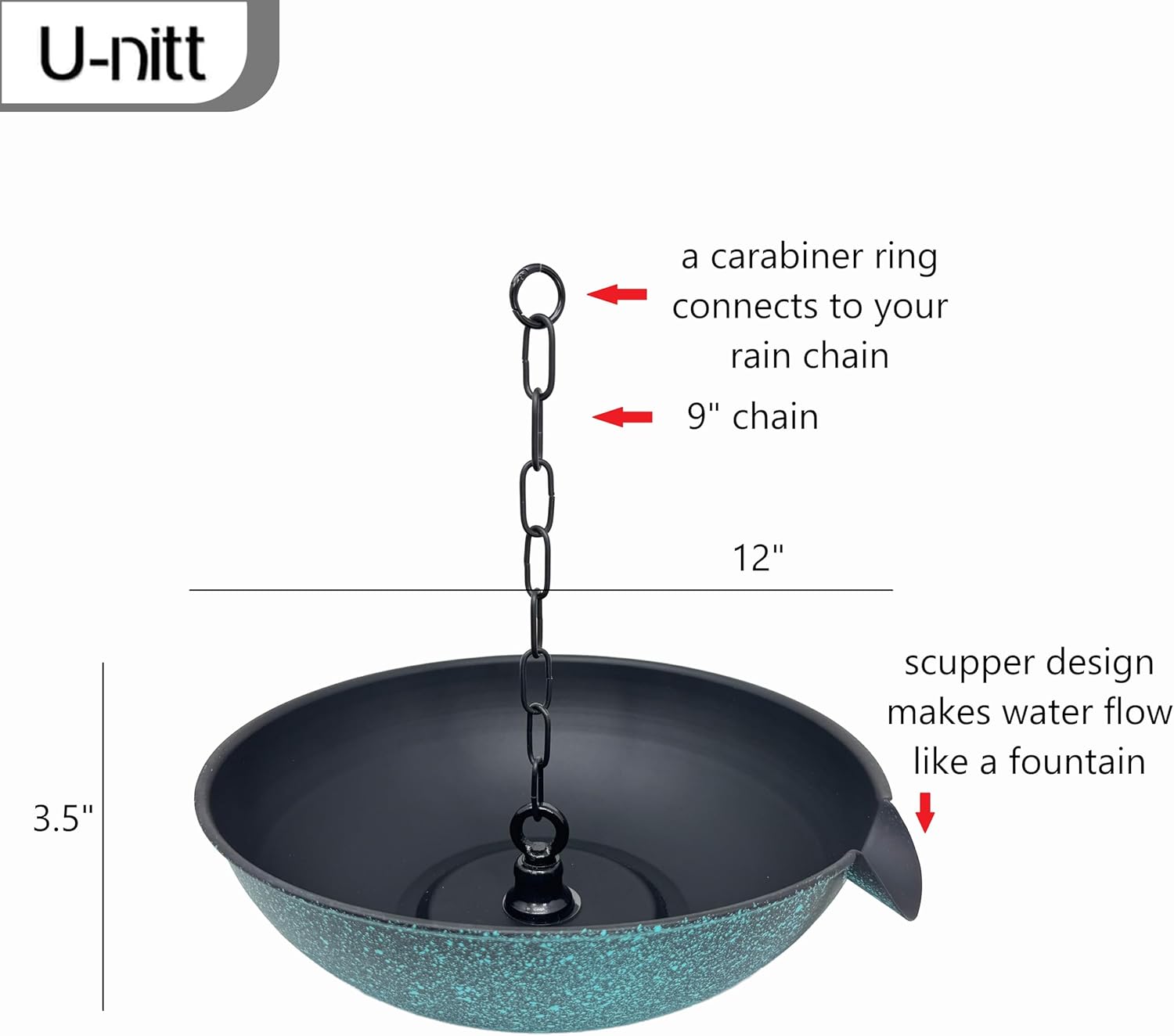
| EDITOR'S PICKU-nitt 12" Spill Bowl Downspout… | Mid-tier[GutterGate™ 3x4 Type-A Downspou](https://www.amazon.com/dp/B09GPXSML3?tag=greenflower20-20)… | Budget pickGutterGate™ 3x4 Type-A Downspou… | |
|---|---|---|---|
| Compatibility | Rain chain | 3"x4" downspout | 3"x4" downspout |
| Color | Black | Black | — |
| Function | Catch basin | Accessory | Accessory |
| Dimensions | 12" diameter | — | — |
| Price | $39.99 | $20.74 | $17.99 |
| See on Amazon → | See on Amazon → | See on Amazon → |
Rain Chains: What They Are, How They Perform, and Where They Belong
A rain chain replaces a downspout entirely. Water exits the gutter outlet, drips down the chain link by link (or cup by cup), and either enters a buried drain, splashes into a decorative basin, or disperses across gravel. The concept originates in traditional Japanese architecture — kusari doi — and has been adapted widely for craftsman, contemporary, and cottage-style homes in North America.
Two primary styles:
- Link chains — open rings or loops made from copper, aluminum, or galvanized steel. Water clings to the links by surface tension and travels downward in a visible stream. Lower cost, more sculptural, better for light rainfall.
- Cup chains — a series of individual cups or bells stacked vertically on a central wire. Water fills each cup and overflows into the next. Quieter, better at managing moderate rain volumes, more forgiving in high-flow situations.
Published specs and owner-reported performance both point to the same limitation: rain chains are not rated for high-flow conditions the way a 3×4-inch downspout is. A standard 3×4 rectangular downspout — the most common residential size — can handle roughly 1,000 square feet of roof drainage in a moderate rainfall event. Rain chain manufacturers and product reviewers at This Old House consistently note that link-style chains start to lose flow control above about 1 inch of rain per hour, while cup-style chains perform better but still lag a properly sized downspout under heavy downpours.
If X, then Y — Rain Chains:
- If your home is in a climate with regular but modest rainfall (Pacific Northwest drizzle, moderate Midwest events) and you’re running a secondary downspout elsewhere on the run, then a rain chain is a low-risk aesthetic upgrade.
- If you’re in a zone that sees 2”+ per-hour storm events regularly (Gulf Coast, Florida, parts of the Southeast), then a rain chain as your only drainage point is a maintenance problem waiting to happen — water will sheet off the chain, overshoot the basin, and saturate your foundation perimeter.
The Material Decision: Copper, Aluminum, Galvanized, and Cast Iron
The material you choose drives both cost and longevity, and it needs to coordinate with your gutter system — mixing metals improperly causes galvanic corrosion (a chemical reaction that accelerates rust and pitting where two dissimilar metals touch with moisture present).
Copper Rain Chains
Copper is the prestige option and the right call if you’re already specifying copper half-round gutters from Revere Copper or Gibraltar Building Products. Out of the box, copper is bright and warm; over 2–5 years it develops a blue-green patina (verdigris) that many homeowners consider the entire point. Fine Homebuilding notes that copper drainage components consistently carry a 50-year-plus functional lifespan when properly installed with compatible copper or stainless hardware — no mixing with aluminum.
By the Numbers: Rain Chain Cost Range (materials only, May 2026)
| Style | Material | Typical Length (8–10 ft) | Price Range |
|---|---|---|---|
| Link chain | Aluminum | 8 ft | $25–$65 |
| Cup chain | Aluminum | 8 ft | $45–$110 |
| Link chain | Copper | 8 ft | $90–$220 |
| Cup chain | Copper | 8 ft | $150–$380 |
| Cast iron cup | Cast iron | 8 ft | $180–$450 |
Per Angi’s 2025 cost guide, professional installation of a single rain chain (including gutter outlet adapter and basin) runs $150–$400 in labor, making total installed cost for a copper cup chain $300–$800 per downspout location — a real number to run against your overall exterior budget.
Aluminum and Galvanized
Aluminum chains make sense when you’re working with a standard aluminum K-style or half-round gutter system and want a decorative upgrade without a materials mismatch. They’re lighter, considerably cheaper, and don’t patina — they stay silver-gray. Galvanized options occupy a middle tier, with slightly more industrial character that suits farmhouse or industrial-contemporary exteriors. Bob Vila’s installation guide flags that galvanized chains should not contact copper gutters; use an aluminum or stainless adapter ring at the gutter outlet to keep metals separated.
Cast Iron
Cast iron cup chains are an architectural statement — heavy, refined, and historically appropriate for Victorian, craftsman, or traditional colonial exteriors. They’re uncommon enough that they read as a deliberate design choice. Weight is the management issue: a 10-foot cast iron chain can approach 15–20 lbs, which requires a reinforced gutter outlet or a dedicated anchor bracket.
Beyond Rain Chains: Scuppers, Conductor Heads, and Decorative Leaders
For practitioners specifying complete exterior drainage packages, rain chains are one tool in a larger vocabulary. Here’s where the other decorative options fit.
Conductor Heads (Collection Boxes)
A conductor head — also called a leader head or collection box — is a decorative metal funnel mounted between the end of a horizontal gutter run and the top of a downspout or leader pipe. They’re standard on Georgian, Federal, and craftsman-revival homes, and they solve a practical problem: when a wide gutter run feeds into a single narrow downspout, the transition point is where overflow happens first. A conductor head creates a small reservoir that buffers the flow.
Copper and painted steel conductor heads are widely available from architectural sheet metal suppliers. Architectural Digest has highlighted them in exterior renovation features as “the single upgrade most likely to elevate a home’s drainage into an architectural detail.” Expect $80–$350 per unit for copper, with custom cast options running higher.
Conductor heads pair naturally with round corrugated or beaded leaders (the old term for round downspouts) rather than modern rectangular tubes — if you’re specifying them, plan to match the round leader profile throughout.
Decorative Scuppers
On flat or low-slope roofs and on parapet walls (the low wall at a roof’s edge), scuppers are the drainage cutout that lets water exit the roof plane. A standard scuppers is a plain rectangular slot — a decorative scupper surrounds that slot with an ornamental copper, bronze, or cast aluminum frame that projects outward like a gargoyle’s mouth.
These are primarily a commercial and high-end residential product, common on contemporary flat-roof homes, Prairie-style architecture, and stucco Mediterranean exteriors. Fine Homebuilding’s copper drainage features cite decorative scuppers as “the design element most frequently requested on high-end flat-roof additions” — they’re functional, they’re visible, and they give a building’s waterline a finished character.
Rain Basins and Splash Blocks
No matter which chain or decorative leader you specify, the terminus matters. A simple splash block (a concrete or polymer ramp that redirects water away from the foundation) is functional but minimal. A decorative rain basin — a buried or surface-set container, often filled with river rock or planted with moisture-tolerant plants — turns the splash zone into a landscape feature. Japanese-inspired installations pair copper cup chains with cast iron or ceramic basins; craftsman and cottage installations often use stacked stone. The basin also quiets the sound of water significantly, which owners in reviews consistently cite as an underrated benefit.
Decision Framework: Matching Alternative to Architecture
Here’s where practitioner intuition either saves or costs you a client relationship. The aesthetic case for decorative drainage is easy to make — the functional case requires honest scoping.
Historic and craftsman homes (pre-1940 construction or faithful reproductions): Copper or cast iron cup chains with conductor heads are historically correct and add value. If the project already includes copper gutters, this is a natural extension of the spec. The additional cost — $300–$800 per downspout location installed — is easy to justify against a $4,000–$8,000 copper gutter package.
Contemporary and modern homes (flat roofs, clean lines, minimal ornamentation): Decorative scuppers and architectural aluminum rain chains in a matte finish are the right register. Avoid ornate cup designs; link chains with geometric profiles read better against modern exteriors. Coordinate with the fascia and trim color — a black-coated aluminum chain against a dark fascia disappears in a good way.
High-volume rainfall zones or single-downspout runs longer than 50 feet: Do not spec a rain chain as the sole drainage point without adding a secondary conventional downspout or overflow outlet. The aesthetic win is not worth the liability of a saturated foundation or flooded basement. A hybrid solution — rain chain on the front-facing corner for visibility, standard downspout on the rear or side — is a legitimate and client-friendly answer.
Budget-conscious whole-home renovations ($150–$600 total drainage budget): An aluminum cup chain at the most visible front corner, paired with standard aluminum rectangular downspouts everywhere else, is the highest-impact-per-dollar move. Angi’s data suggests that single rain chain installations are one of the most common DIY exterior upgrades in this price range — the gutter outlet adapter is straightforward, and the install on a standard single-story corner takes under an hour.
The Practical Checklist Before You Order
Before specifying or purchasing any decorative downspout alternative, run through these four checkpoints:
-
Flow volume match: Calculate your roof’s drainage area (length × width of the contributing roof plane). If any single downspout location is draining more than 800 sq. ft. of roof, plan for a cup chain rated for high flow or supplement with a conventional downspout.
-
Metal compatibility: Match chain material to gutter material. Copper chain on aluminum gutters requires an isolation adapter (stainless or neoprene-gasketed) to prevent galvanic corrosion. This Old House’s rain chain installation coverage flags this as the most commonly skipped step in DIY installations.
-
Terminus plan: Confirm that the basin, splash block, or drain inlet at ground level is sized to handle peak flow without pooling within 6 feet of the foundation. This is a code consideration in many municipalities.
-
Wind load and anchor point: Rain chains in high-wind zones need a bottom anchor — a stake or basin weight — to prevent swinging that damages the gutter outlet over time. Bob Vila’s installation guide recommends a minimum 5-lb basin anchor in any zone that sees sustained winds above 30 mph.
Decorative drainage is one of the most visible, lowest-regret exterior upgrades available — but only when it’s sized and detailed correctly. Get the flow math right, match the metal, and the design choice takes care of itself.